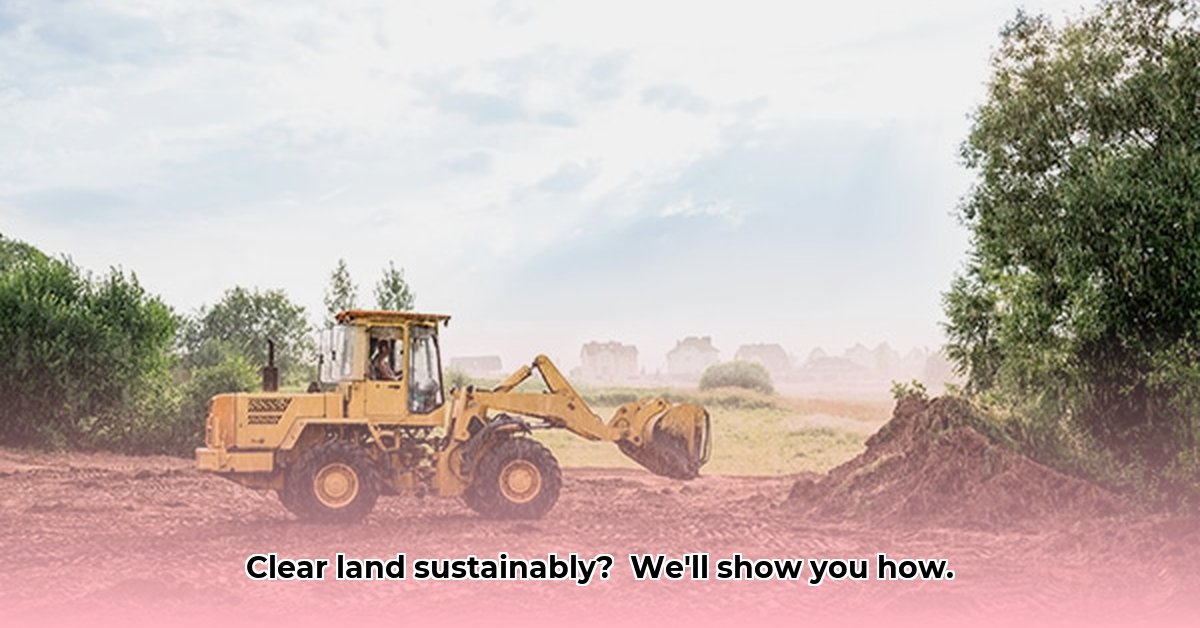
Ready to transform overgrown land into productive farmland? Clearing land with a tractor can be efficient and environmentally friendly, but careful planning is crucial. This guide provides a step-by-step approach to sustainable land clearing, emphasizing safety and environmental responsibility. For more information on choosing the right tractor, check out this tractor buying guide.
Assessing Your Land: Preparation is Key
Before starting, thoroughly assess your land. What's the size of the area needing clearing? What type of vegetation exists (grass, shrubs, trees)? Identifying this helps determine the appropriate equipment and techniques. Are there any valuable trees or plants to preserve? Precisely marking their locations is vital for protection during the clearing process. Crucially, contact your local utility companies to have underground lines marked to prevent accidents and damage. Failing to do so could result in costly repairs and serious injuries.
Choosing Your Tools: The Right Equipment for the Job
Tractor selection depends entirely on the project's scale. For smaller plots, a compact tractor often suffices. Larger areas might necessitate a more powerful machine, potentially requiring professional assistance. Always prioritize safety: ensure your tractor is in excellent condition and you're proficient in its operation. Various attachments cater to different tasks. A rotary cutter excels at clearing dense brush, while a grapple is ideal for moving logs and debris. A box blade efficiently levels the ground afterward. Think of it as assembling a specialized toolkit – the right tools ensure efficient and clean work.
Step-by-Step Land Clearing Guide
Here's a practical, numbered approach to safe and effective land clearing:
Preparation: This is paramount. Clearly mark boundaries and locate/mark all utilities. Plan your path strategically to minimize disruption and maximize efficiency. A well-planned approach significantly reduces the overall project time and potential risks.
Careful Clearing: Begin at the perimeter and systematically work inward. Multiple passes with your chosen attachments might be necessary, depending on vegetation density. Slow and steady wins the race; rushing can lead to errors and accidents.
Efficient Debris Removal: After clearing, remove all materials efficiently. Explore recycling or composting options for a sustainable way to reduce waste and minimize environmental impact. This also avoids costly disposal fees.
Land Leveling: With debris removed, level the land using a box blade or similar equipment, creating a smooth surface for future use. Multiple passes might be needed depending on terrain unevenness. Proper leveling is essential for optimal seedbed preparation and crop growth.
Responsible Cleanup: Dispose of all leftover debris responsibly, showing your commitment to sustainable practices. Check local regulations for appropriate disposal methods.
Sustainable Land Clearing Practices
Sustainable land clearing minimizes environmental impact. Key strategies include:
Selective Clearing: Don't clear everything! Certain plants benefit soil and the environment. Leaving them promotes biodiversity and soil health. Some experts recommend leaving 10-20% of the original vegetation cover.
Mulching: Instead of removing all cut material, consider mulching it. This provides natural fertilizer and erosion control. Smaller pieces decompose naturally, enriching the soil.
Soil Conservation: Avoid unnecessary soil disturbance to protect soil integrity and minimize erosion. Gentle methods can make a significant difference in long-term soil health. Ongoing research explores the most effective techniques.
DIY vs. Professional Land Clearing: A Comparative Analysis
Clearing land can be a DIY project, but professional help might be preferable based on your skills and project size. Smaller projects (under five acres) might be manageable alone, but larger projects often benefit from expert assistance. Consider experience, available equipment, and the time commitment. Professionals might be more expensive upfront but can save time and reduce stress.
Comparative Table:
| Feature | DIY | Professional Services |
|---|---|---|
| Cost | Lower initial cost | Higher initial cost |
| Time Commitment | Significantly higher | Much lower |
| Skill Requirement | Requires tractor operation skills | No tractor experience needed |
| Equipment | Requires owning/renting equipment | Equipment provided |
| Environmental Impact | Potential for greater impact | Often more sustainable practices employed |
Ongoing research explores the relative environmental impacts of both approaches. Some studies suggest professional operations may use more efficient, less damaging methods.
Always comply with local rules and regulations. Obtain necessary permits and follow environmental guidelines. Ignoring these can result in significant fines.
Key Considerations for Sustainable Agriculture
This guide provides a foundation for your land-clearing project. Thorough planning and mindful execution are crucial for a successful and eco-friendly outcome. With careful consideration, you can achieve your goals while respecting the environment. Remember that sustainable agricultural practices demand careful consideration of the environmental aspects, which often benefits from professional expertise.